

Table of Contents
Introduction
Achieving any goal—whether personal, professional, or business-related—requires a clear strategy. Without a structured plan, it’s easy to lose focus, become overwhelmed, or waste time on unproductive tasks. That’s why learning how to make an action plan is crucial for success.
An action plan provides a step-by-step framework to help you stay organized and motivated. It breaks down big goals into smaller, manageable steps, ensuring that each task is completed efficiently. Whether you’re looking to improve productivity, launch a business, or complete a major project, a well-designed action plan can guide you from start to finish.
In this guide, you’ll learn how to define clear objectives, break them into actionable steps, set realistic timelines, track progress, and stay adaptable to challenges.
Benefits of an Action Plan
Creating an action plan offers several advantages:
| Benefit | Description |
|---|---|
| Clarity and Focus | Defines clear objectives and steps, reducing confusion. |
| Increased Efficiency | Helps prioritize tasks and allocate resources effectively. |
| Accountability | Assigns responsibility for tasks, ensuring follow-through. |
| Motivation and Confidence | Breaking goals into smaller steps makes them more achievable. |
| Improved Time Management | Deadlines help keep progress on track and prevent procrastination. |
Action Plan Components
A well-structured action plan includes the following key components:
- Action Plan Objectives – Clearly define what you aim to achieve. Objectives should align with your overall vision and be specific enough to guide your efforts.
- Action Plan Steps – Break down your goal into smaller, manageable steps. Each step should move you closer to completing your objective.
- Action Plan Items – List all the specific tasks, actions, or deliverables needed to accomplish each step. These are the actionable elements of your plan.
- Action Plan Timeline – Assign deadlines to each step and task to ensure steady progress. A timeline keeps you accountable and helps prevent delays.
- Action Plan Resources – Identify the tools, materials, budget, or support needed to execute your plan. This helps avoid unexpected obstacles.
- Action Plan Matrix – A structured table or framework that outlines tasks, responsibilities, deadlines, and progress tracking. This helps with organization and accountability.
- Action Plan Report – A summary document that tracks progress, challenges, and adjustments made along the way. Regular reporting ensures transparency and keeps efforts aligned with the goal.
- Assignments – Clearly designate who is responsible for each task or step. Assigning ownership ensures accountability and smooth execution.

7 Easy Steps to Create The Perfect Action Plan
1. Define Your Goal
The first step in making an action plan is to clearly define your objective. Your goal should be specific, measurable, achievable, relevant, and time-bound (SMART).
Understanding the SMART Technique:
- Specific – Clearly define what you want to accomplish.
Example: “I want to run a 10K race instead of just saying I want to be a better runner.” - Measurable – Set criteria to track progress and measure success.
Example: “I will track my progress by running three times a week and gradually increasing my distance.” - Achievable – Ensure the goal is realistic and attainable within your capabilities.
Example: “I will train for three months, starting with shorter runs and building up to 10K.” - Relevant – Align the goal with your broader objectives or values.
Example: “Running a 10K aligns with my overall health and fitness goals.” - Time-bound – Set a deadline to maintain focus and urgency.
Example: “I will complete the 10K race within the next four months by following my training schedule.”
Instead of saying, “I want to get fit,” a SMART goal would be, “I want to lose 10 pounds in three months by exercising five times a week and eating a balanced diet.”
2. Break It Down into Steps
Once you have a clear goal, break it down into smaller, manageable steps. This makes the process less overwhelming and helps track progress effectively.
How to Make a List of Smaller Steps:
- Identify major milestones – Determine key points you need to achieve before reaching the final goal.
- Break down each milestone – Divide big milestones into smaller, actionable tasks.
- Prioritize tasks – Arrange steps in a logical order and identify what needs to be done first.
- Assign dependencies – Determine if some tasks must be completed before others.
Example: If your goal is to start a business, your steps might include:
- Conduct market research
- Develop a business plan
- Register the business
- Secure funding
- Launch marketing campaigns
- Start selling your product or service
3. Set a Timeline
Setting a timeline is crucial because it keeps you accountable and ensures steady progress. Without deadlines, tasks may be delayed indefinitely.
Why Being Realistic About Time is Important
If you set unrealistic deadlines, you may rush through tasks or become discouraged. On the other hand, allowing too much time may lead to procrastination. Consider the following when setting timelines:
- Task complexity – Complex tasks require more time than simple ones.
- Available resources – Limited resources can slow progress.
- Unexpected delays – Account for possible setbacks.
How to Identify the Time You Will Need:
- Estimate time for each task based on past experience or research.
- Break tasks into phases to ensure steady progress.
- Consult with others (if applicable) to validate time estimates.
Example: If you’re launching a website, your timeline might look like this:
- Week 1-2: Research and planning
- Week 3-4: Website design and content creation
- Week 5-6: Testing and revisions
- Week 7: Launch the website
4. Identify Resources and Support
Determine what resources, tools, or support you need to create an action plan. This includes financial investment, training, mentorship, or technology.
Example of Resources and Support Needs:
- Financial Resources – Funding to cover software, hiring, or marketing costs.
- Technology – Computers, software, or digital tools needed to execute tasks.
- Human Resources – Team members or external consultants to assist with execution.
- Mentorship and Guidance – Seeking advice from industry experts.
Example: If you plan to start a photography business, you may need a camera, editing software, a website, and a social media marketing strategy.
5. Monitor Progress
Regularly review your action plan to track progress and make adjustments as needed.
Tools to Track Progress:
- Project management software (Trello, Asana, Monday.com)
- Spreadsheets and checklists to track completed tasks
- Progress charts to visualize milestones
- Regular meetings to review progress with your team
- Internal reporting for documentation and accountability
Tracking progress helps identify obstacles early and allows for timely adjustments.
6. Stay Flexible and Adapt
Challenges will arise, and plans may need adjustments. Stay flexible and be willing to modify your approach if necessary. If a particular step isn’t working, find an alternative path without losing sight of the goal.
7. Stay Committed and Motivated
Maintaining motivation is key to following through. Celebrate small wins along the way and remind yourself of the end goal. Surround yourself with a supportive network that can encourage and hold you accountable.
Action Plan Templates
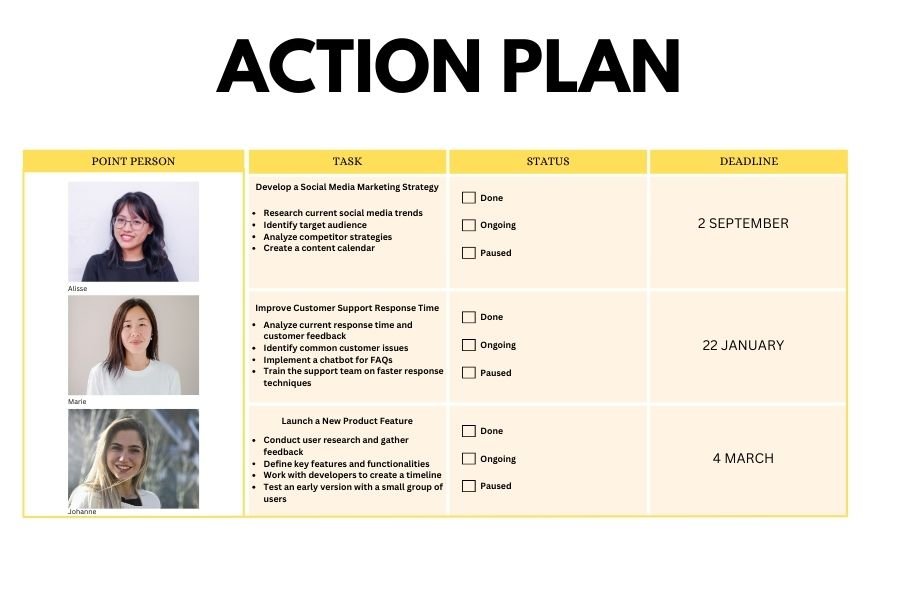
Here is an example of an effective template for a wide range of goal-setting situations:
Here are some powerful digital tools to create an effective digital action plan:

FAQ’s
What are the 5 steps of an action plan?
The five essential steps to creating an effective action plan are:
1. Define your goal – Make sure it’s clear, specific, and measurable.
2. Break it down – Identify key milestones and the tasks required.
3. Set a timeline – Assign realistic deadlines to each step.
4. Gather resources – Identify the tools, support, and funding needed.
5. Monitor and adjust – Track progress and make necessary adjustments.
What are the 3 parts of action plan?
An action plan consists of three main parts:
– Goals and objectives – What you aim to achieve.
– Tasks and steps – The specific actions needed to reach the goal.
– Timeline and resources – Deadlines and required tools/support.
What should a plan of action look like?
A good action plan should include:
– A clear goal (SMART format preferred).
– A list of tasks broken down into manageable steps.
– Deadlines for each task.
– Resources needed to complete the tasks.
– A tracking system to monitor progress and adjust if needed.
Conclusion
Knowing how to make an action plan is a powerful skill that helps turn ideas into reality. Whether you’re setting personal goals, launching a business, or managing a complex project, a well-structured action plan keeps you focused, organized, and accountable.
By defining clear objectives, breaking them down into actionable steps, setting realistic timelines, and tracking progress, you create a solid foundation for success. The ability to make an action plan allows you to stay motivated, overcome obstacles, and adapt when necessary.
Now that you understand the importance of action planning, start applying these steps today. The sooner you take action, the closer you get to achieving your goals.